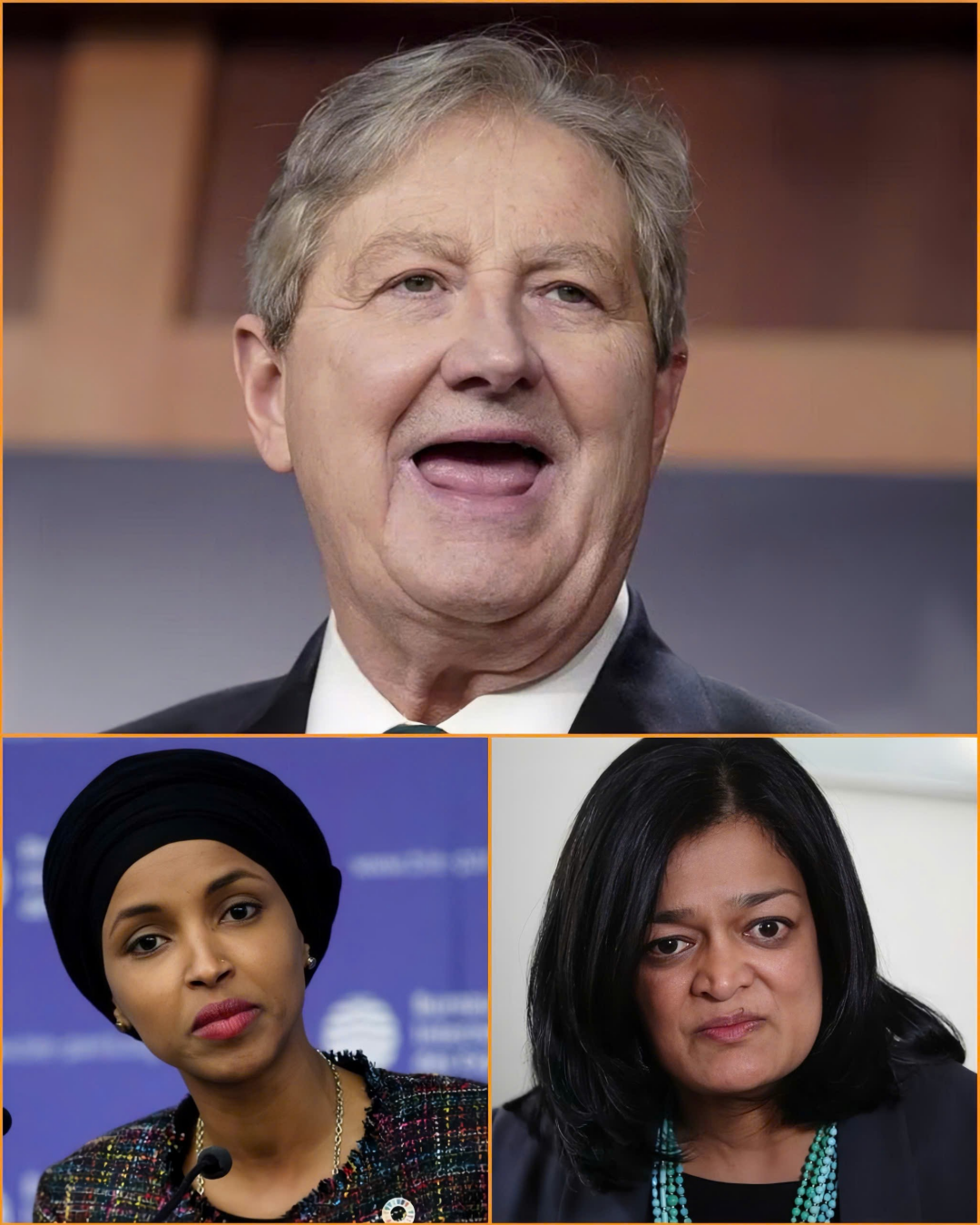
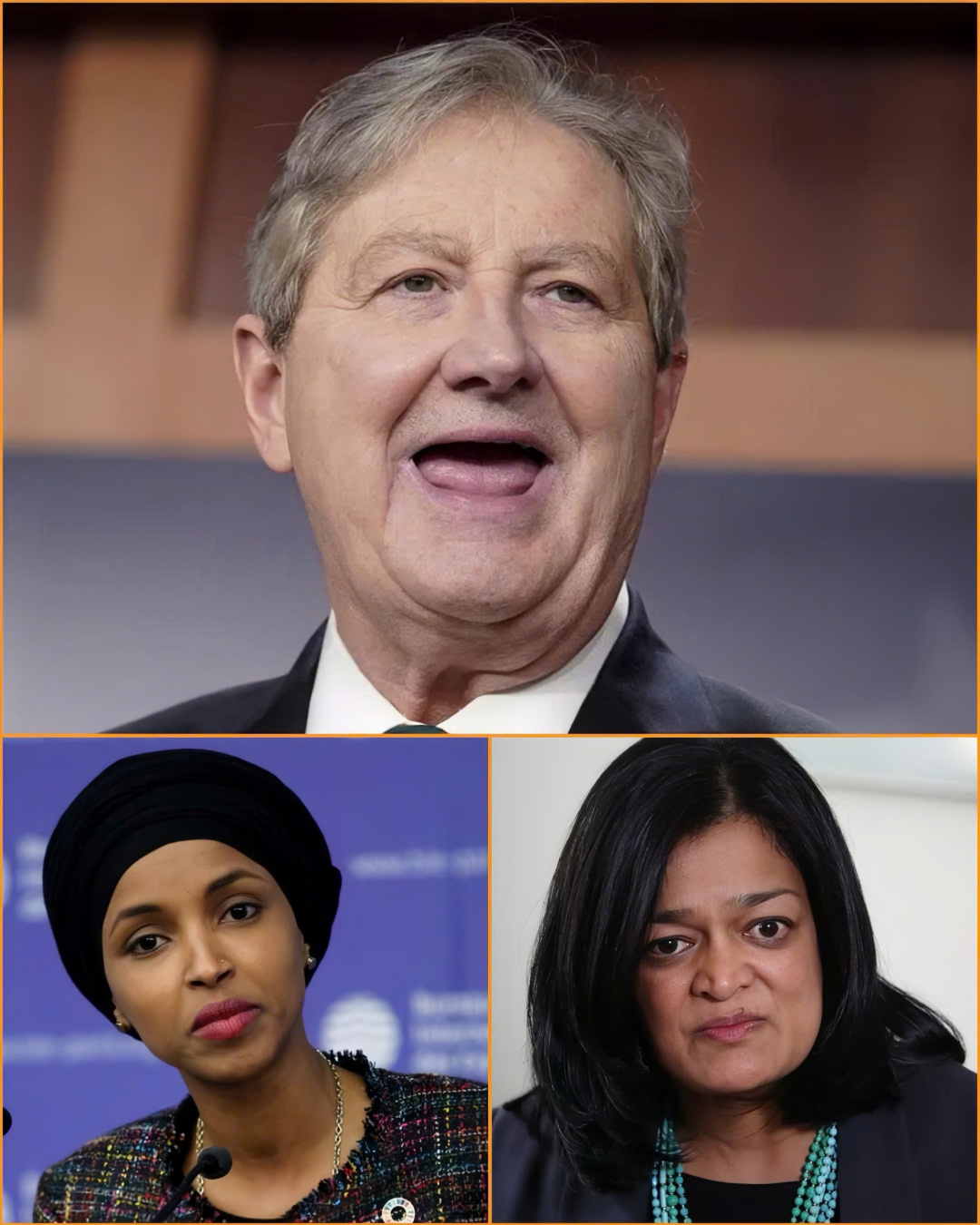
THE WATCHDOG SHOCKWAVE: How a Viral Report Triggered the Most Explosive Political Firestorm Around Ilhan Omar This Year
There are political storms that build slowly, gathering over days or weeks.
And then there are the other kinds — storms that appear in an instant, sudden and violent, tearing through the internet with no warning.
That’s what happened when a watchdog group released a single report — vague in some places, ambiguous in others, and completely unverified in its online interpretations — but potent enough to ignite a chain reaction of confusion, speculation, and political electricity.
Within hours, the report became the center of the loudest political conversation of the week.
Not because anyone had been found guilty.
Not because a formal ruling existed.
Not because investigators had reached conclusions.
But because the internet filled in the blanks, and those blanks turned into a frenzy.
And at the center of that frenzy was Representative Ilhan Omar.
This is the longform story of how it happened — not as a story about guilt or innocence, but as a story about rumor, reaction, and the unstoppable force of viral politics.
CHAPTER 1 — THE REPORT THAT LIT THE MATCH
The watchdog report was posted quietly.
A PDF shared on a mid-sized accountability website.
A few bullet points.
A summary of concerns about “student loan irregularities” involving several unnamed officials across multiple states.
No names.
No charges.
No confirmation of wrongdoing.
Just questions.
Just mentions of discrepancies.
Just phrases vague enough to be interpreted a hundred different ways.
But then came the line that launched the wildfire:
“One case involving a federal official requires further review.”
The report did not name Ilhan Omar.
But within minutes, several blog accounts and political influencers speculated:
“Is this talking about Ilhan Omar??”
A theory with no supporting evidence.
A conclusion drawn from thin air.
But this is the internet.
And the internet doesn’t wait.
CHAPTER 2 — THE SPECULATION BEGINS
Political rumor accounts began posting threads:
“Insiders say the unnamed official could be Omar.”
“The timing lines up.”
“This might be a major scandal.”
Screenshots spread across Twitter (X).
TikTok creators stitched dramatic videos with ominous music.
YouTube commentators posted “BREAKDOWN” thumbnails with red arrows and shocked faces.
Some people didn’t even read the report.
They just saw someone else’s interpretation of someone else’s interpretation…
and believed it.
Within hours, the online narrative mutated from:
“Is this about her?”
to
“It’s probably about her.”
to
“BREAKING: Omar involved in loan scandal?”
Again — all speculation.
All amplified by people who benefited from attention.
And the internet rewarded it.
CHAPTER 3 — HOW “GUILTY” SUDDENLY ENTERED THE CONVERSATION
No court.
No ruling.
No indictment.
No official findings.
Yet somehow the word “guilty” started trending.
Why?
Because a large influencer misread a headline and posted:
“Omar found guilty???”
The post went viral in seconds —
not because it was accurate, but because it was dramatic.
People reacted emotionally, not logically.
Supporters rushed to defend her.
Critics rushed to condemn her.
Neutral observers rushed to ask questions.
And in that digital collision, a false idea gained momentum.
Screenshots circulated:
cropped
edited
out of context
spun for maximum shock value
Every new post added energy to the storm.
Even people correcting the misinformation unintentionally boosted it.
Because on the internet:
Attention = amplification.
Amplification = fuel.
Fuel = virality.
CHAPTER 4 — THE “GARNISHED PAY” DEMAND
Then came another twist.
One watchdog commentator — not a government official, not an IRS spokesperson — publicly stated:
“If the allegations in the report turn out to be valid, someone could face financial penalties.”
That sentence — theoretical, conditional, cautious — became…
“WATCHDOGS DEMAND GARNISHED PAY!”
It didn’t matter that it wasn’t literal.
It didn’t matter that it wasn’t official.
It didn’t matter that no one had been found responsible for anything.
The internet loves the most extreme version of a story.
People clipped the phrase.
Turned it into headlines.
Turned it into memes.
Turned it into fire.
And so the rumor grew.
CHAPTER 5 — THE “SEAT ON THE LINE” SPIRAL
Political commentators jumped into the frenzy.
Some speculated:
“If the controversy keeps growing, it could be politically dangerous.”
That reasonable, mild observation mutated into:
“Her seat may be at risk!”
Which then mutated into:
“Her seat is in danger!”
Which mutated again into:
“She might lose her seat!”
Which finally mutated into:
“She WILL lose her seat.”
Each step moved further from reality.
Each step grew more dramatic.
And each step spread faster.
This is how misinformation evolves —
not through lies, but through exaggeration, repetition, and momentum.
CHAPTER 6 — THE INTERNET’S ROLE
This wasn’t just about Ilhan Omar.
It was about us.
The digital public.
Within the frenzy, you could see the anatomy of modern virality:
1. Ambiguous report
People filled in blanks with imagination.
2. Influencer amplification
Creators boosted claims without checking context.
3. Outrage economy
Outrage content gets more engagement than nuance.
4. Algorithmic acceleration
Platforms pushed high-engagement posts regardless of accuracy.
5. Audience polarization
People reacted emotionally, fueling more discussion.
6. Narrative solidification
The more the rumor spread, the more “true” it felt — even without evidence.
The scandal wasn’t real.
But the reaction was.
And reaction is what reshapes public perception.
CHAPTER 7 — THE POLITICAL SHOCKWAVE
Politicians responded — not to the facts, but to the public uproar.
Some called for clarification.
Some dismissed the rumor as nonsense.
Some used it as a weapon.
Cable news ran segments not about guilt…
but about the viral rumor itself.
“Why is this spreading so fast?”
“What does this say about political discourse?”
“Is this a coordinated misinformation surge?”
Even those who refused to comment found themselves indirectly pulled into the vortex.
This wasn’t a scandal.
It was a conversation spiral.
And the spiral was unstoppable.
CHAPTER 8 — THE QUIET REALITY
Once analysts began examining the original report, the truth became unavoidable:
The watchdog report was general.
It did not name Ilhan Omar.
It did not accuse her of fraud.
It did not declare guilt.
It did not demand penalties.
Everything viral…
was born from misunderstanding.
But by the time fact-checkers began publishing explanations, the storm had already passed through millions of feeds.
That’s the tragedy of the modern information cycle:
Correction is quiet.
Viral rumor is loud.
And the rumor had reached a deafening volume.
CHAPTER 9 — THE AFTERMATH
As the frenzy cooled, one question remained:
Why did this story explode?
Why this report?
Why this politician?
Why now?
The answer has nothing to do with Ilhan Omar herself.
It has everything to do with:
political polarization
distrust in institutions
the hunger for scandal
the speed of social media
the economy of outrage
the thrill of “breaking news”
The event wasn’t a reflection of Omar.
It was a reflection of digital culture.
A culture where:
Truth moves slow.
Rumor moves fast.
Context gets lost.
Emotion rules.
Narrative wins.
CHAPTER 10 — WHAT THE STORY REALLY MEANS
This wasn’t a criminal case.
It wasn’t a legal ruling.
It wasn’t a proven scandal.
It wasn’t a guilty verdict.
It was a rumor wildfire, fueled by assumption and algorithm.
A story about how easily misinformation can spread.
A story about how quickly public narratives can shift.
A story about how one politician can become the center of chaos without doing anything at all.
But it’s also a warning—
In the age of instant sharing and constant outrage,
reputation can be shaken not by truth, but by virality.
And this event was the perfect example.