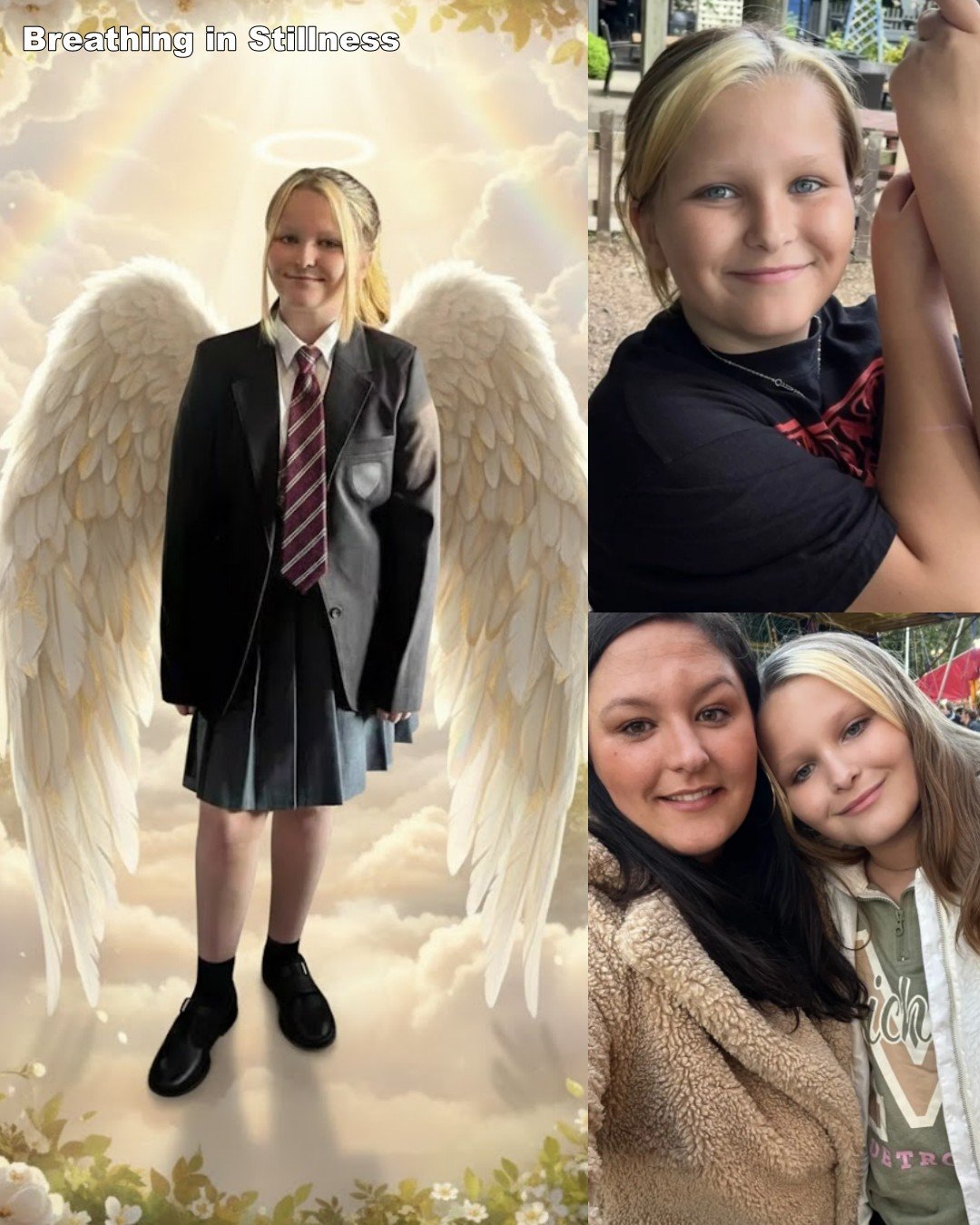
Mia Lucas was twelve years old.
She had once been described by her mother, Chloe Hayes, as a fun, bubbly girl with a love for life.
Her laughter could light up a room, and she delighted in singing, drawing, crafts, and horse riding.
She had dreams like any other child—hoping one day to open her own beauty salon or perhaps become a vet.
Mia was imaginative and compassionate, always looking for ways to help others.
Friends and family adored her, and even strangers who met her often commented on her bright smile and curiosity.
But those dreams faded as an unseen darkness crept into her young mind.

In the weeks before Christmas 2023, Mia’s behavior began to change.
Her cheerful demeanor gave way to confusion and agitation.
She would sometimes retreat into silence for hours, her eyes distant and unfocused.
Other times, she became irritable, snapping at her mother or withdrawing from activities she once loved.
Her mother noticed a growing unease, a sense that something was not right inside Mia’s head.
One day, Mia tried to get knives from the kitchen, and Chloe could only watch in horror as her daughter fought to resist help.
It was a family caught in the unthinkable—witnessing a child unraveling before their eyes, powerless to stop it.
Mia began talking about strange things she claimed she could see—figures no one else could perceive.

She mentioned voices urging her to “go to heaven” and warning of dangers to her family.
Her sleep became restless, often interrupted by vivid nightmares that left her screaming.
By New Year’s Eve, the situation had escalated.
Mia was admitted to Queen’s Medical Centre in Nottingham, her mind clouded with voices no one else could hear.
Doctors and nurses quickly recognized the severity of her condition.
She spoke of men in black overalls.
She attempted to drink hand sanitizer and demanded her mother prove who she was.
Chloe watched in despair as her child’s reality seemed to slip further away.
Medical staff documented an acute psychotic episode.

The decision was made to section Mia under the Mental Health Act on January 4, 2024, transferring her to Emerald Lodge at The Becton Centre in Sheffield.
The unit had been chosen because it accepted patients under the age of thirteen, a rare provision in child mental health facilities.
But the transfer was not immediate—there was no available bed until January 9.
During those five days, Mia’s vulnerability remained high, and her parents feared for her safety.
Even with constant support from her mother, Mia’s hallucinations intensified.
She imagined dangers lurking in every corner, and the voices grew louder, more insistent.
Within the hospital walls, Mia’s struggle did not cease.
She continued to hear voices urging her to go to heaven, warning that harm would come to her loved ones if she did not obey.
She ran around the ward, restless and frightened.

Attempts to self-harm became more frequent, each more desperate than the last.
Medical staff tried to maintain observation, but their resources were stretched thin.
Paediatric colleagues were consulted to ensure there were no physical illnesses contributing to Mia’s psychotic state.
It was revealed that she had suffered a viral infection two weeks prior, which may have weakened her and contributed to the episode.
The inquest also revealed that Mia had recently moved home, and was verbally and physically bullied at school.
All these stressors compounded, making her mental state even more fragile.
Chloe visited Mia every day.
She brought photos, toys, and little comforts in an attempt to tether her daughter to reality.
She pleaded with staff to remove potential hazards from Mia’s room, but her concerns were repeatedly dismissed.
Observation charts were inadequate, and shift handovers failed to communicate critical details about Mia’s condition.
Even with a mother’s vigilance, Mia remained exposed to the dangers her psychosis presented.

On January 29, 2024, just three weeks after being moved to The Becton Centre, Mia was found unresponsive in her room.
The doctors attempted resuscitation, but it was too late.
Mia Lucas, a bright, creative child with a world of possibilities ahead, had taken her own life.
The inquest into her death exposed a story of systemic failures and gaps in care.
It highlighted inadequate monitoring, poor communication among staff, and a healthcare system unprepared for the complexities of child mental illness.
Senior coroner Tanyka Rawden asked jurors to consider not only Mia’s mental health history but also the care she received at the hospital, including risk assessments surrounding self-harm.

Mia’s mother described her frustration and grief: “I believe Mia was failed at every stage. From the moment I took her to hospital, through her diagnosis, to the appalling failures at The Becton Centre.”
She recounted feeling powerless, unable to protect her daughter from the environment that was supposed to safeguard her.
Chloe’s visits every day were a comfort to Mia, but ultimately insufficient.
Mia’s story is a devastating example of how multiple pressures—physical illness, bullying, family upheaval, and untreated mental illness—can converge tragically in the life of a child.
Her hallucinations and fear were real to her, terrifying, and unrelenting.
Even brief lapses in care became critical.
The failure to act decisively, to provide a safe and secure environment, contributed to the tragedy.

Yet behind the statistics and reports is a human story—a mother’s love, a daughter’s laughter, and a life abruptly cut short.
Friends remember Mia’s creativity, her smile, and her imagination.
Teachers recall a child who once approached every task with curiosity and joy.
The world she left behind is marked by grief, but also by a call to action.
Her story has become a rallying cry for better mental health care for children, for systems that are responsive, vigilant, and compassionate.
For Mia, the voices she heard were terrifyingly real.

Her cries went unheard, not because they were quiet, but because the mechanisms to protect her were insufficient.
She is gone, but her story continues to speak, demanding attention, empathy, and reform.
Every day, children like Mia face battles unseen.
Every day, families hope for support and understanding that is too often absent.
The loss of Mia Lucas reminds us of the fragility of young minds, and the urgent need to listen, to act, and to care.
Her laughter may have ended too soon, but her legacy can still transform the future for others.